
A Beginner's Guide to Using Fishfinders
Demystifying sonar technology, transducer positioning, and display interpretation so you can pinpoint drop-offs, structure, and active fish with confidence.
 Sonar Basics
Unlocking Underwater Vision on Inflatable & Fishing Boats
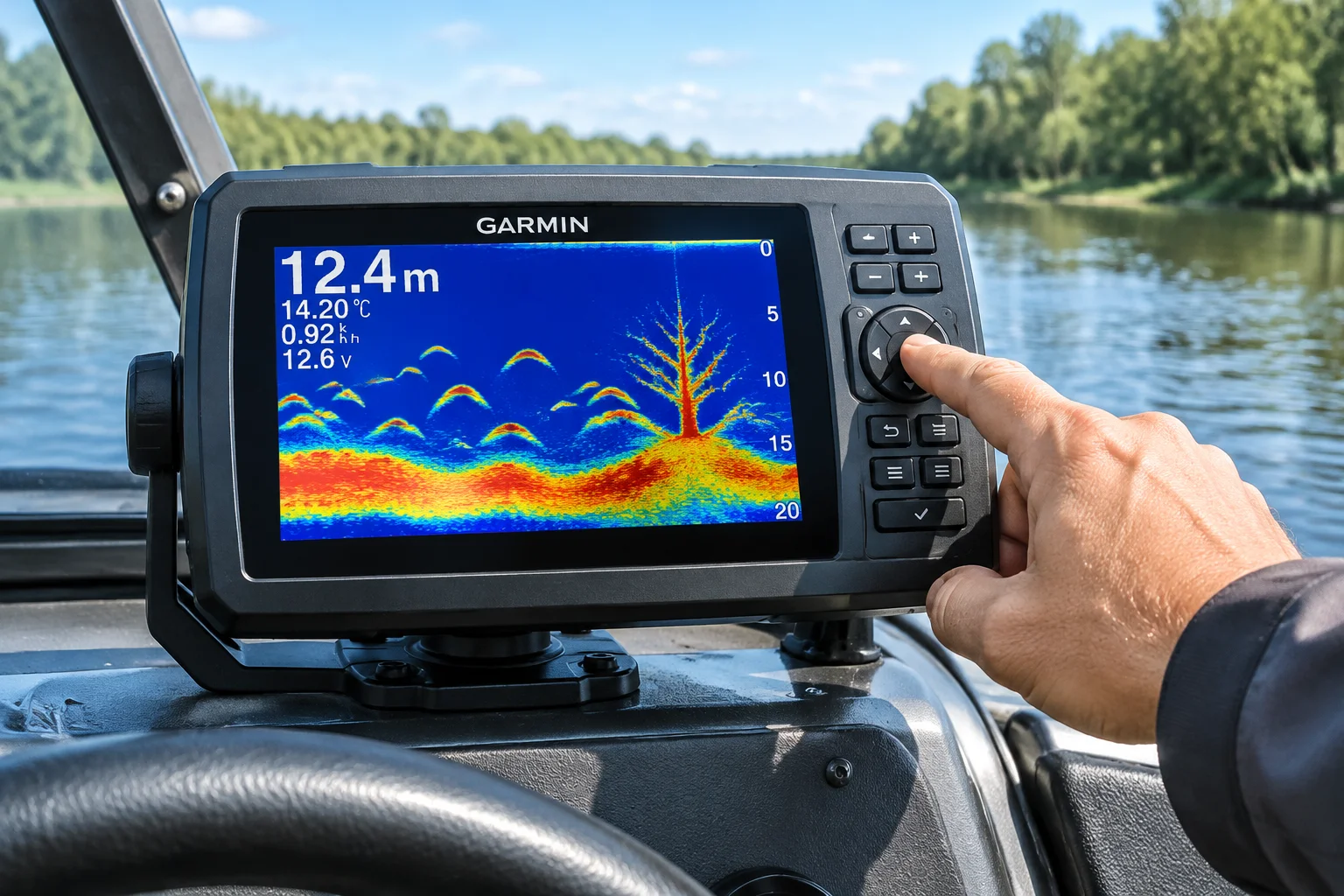
Modern fishfinders emit acoustic soundwaves through water that bounce back to reveal depth changes, thermoclines, submerged timber, and fish arches. Understanding core frequency bands, correct transducer angle, and clutter suppression turns a confusing screen into your sharpest angling advantage.
Article Chapters & Advice
How Marine Sonar Decodes the Water Column
At its core, a fishfinder operates by transmitting electrical pulses converted into sound waves by a submerged transducer. These sound waves travel downward through the water at roughly 1,480 meters per second. When the beam collides with an object of varying density—be it hard rock, silty mud, thick weed cover, or the air-filled swim bladder of a trophy bass—a portion of the acoustic wave reflects back up to the transducer, which calculates the exact elapsed time and visualizes target depth on the console.
Beginners frequently misread every bright arc on their display as a catchable fish. In reality, interpreting raw sonar data requires looking at bottom hardness and physical structure first. Hard bottoms like granite gravel produce a thick, vibrant bottom band with clear secondary echoes, whereas soft mud absorbs acoustic energy, rendering a narrow, dim line. Predatory fish consistently position themselves along dynamic transitions—such as rocky drop-offs, sunken logs, and current seams—where baitfish seek refuge.
Essential Steps for Accurate Sonar Operation
Calibrating your console settings eliminates clutter and delivers crisp target separation without overwhelming the display:
- Mount the transducer parallel to the water line at trolling speeds to prevent skewed arches and ghost returns.
- Select high frequencies (200 kHz or CHIRP High) for shallow inland waters under 60 feet for pinpoint detail.
- Switch off Fish ID symbols and practice reading authentic sonar arches to discern actual fish size and density.
- Adjust manual sensitivity to approximately 70-80% until background surface noise just begins to dissolve.
When drifting or operating at low trolling speeds, a fish moving directly through your sonar cone generates a distinct arch shape as distance decreases and then expands. If your vessel remains stationary anchored over a school, those arches flatten into steady horizontal lines. Mastering this kinetic visual relationship will quickly eliminate guesswork on every river or lake expedition.
Related Adventures & Guides
Ready to test these techniques on open water?
Explore our range of heavy-duty inflatable boats, SUP boards, carbon paddles, and electric marine motors.
Dan K. Verified Reader
Fishfinders always confused me, this made it simple.