
How to Choose the Right Inflatable Boat for Fishing
From hull dimensions and transom rigidity to fabric denier and deck stability, discover how to select the optimal inflatable craft for your waters.
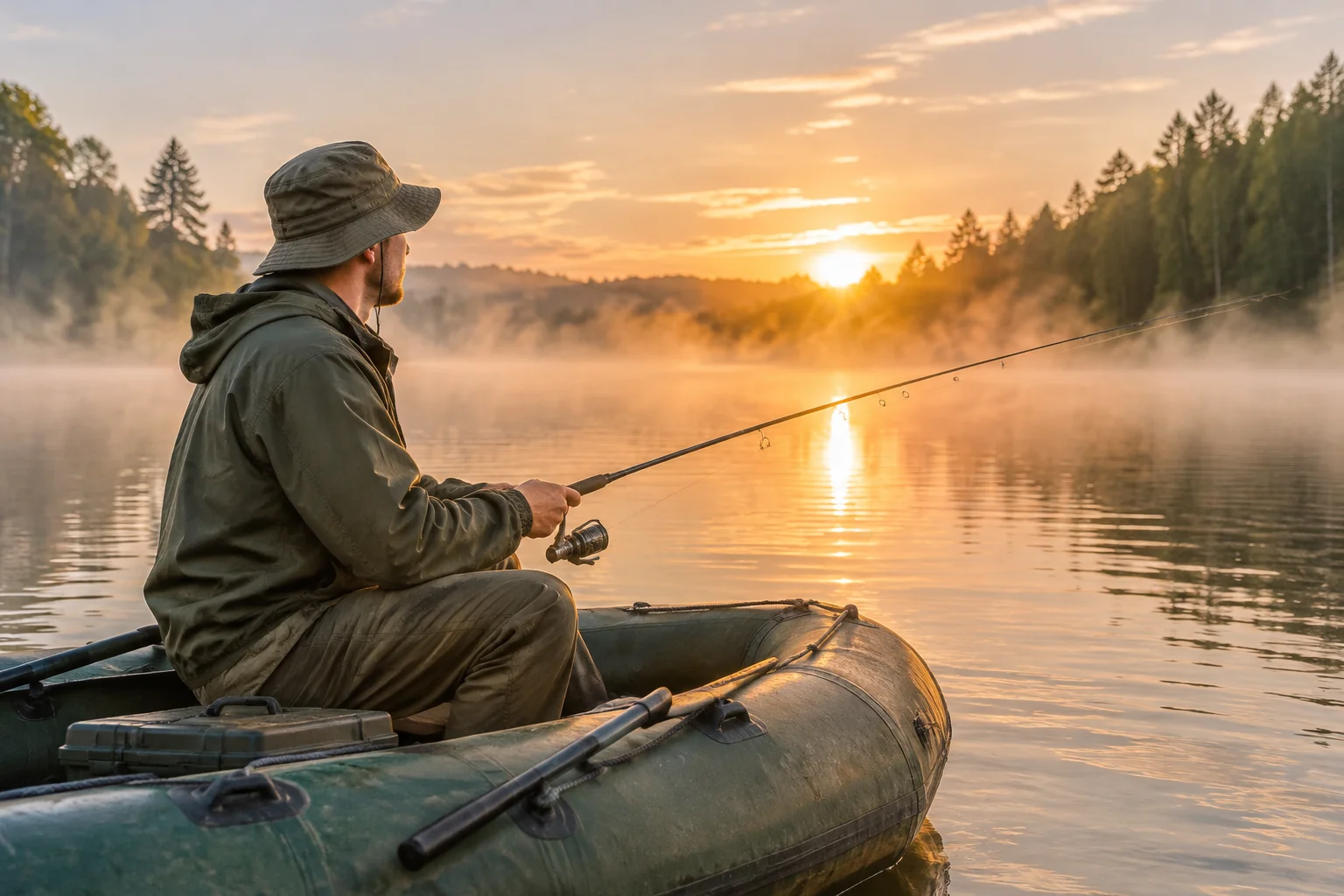 Buyer's Guide
Balancing Portability, Durability, and Water Rigidity
Selecting a fishing inflatable requires matching your usual fishing grounds with the proper hull design, fabric density, and floor stability. Whether exploring quiet freshwater bays or tackling open reservoir chop, the right setup ensures safety, effortless transport, and all-day casting comfort.
Article Chapters & Advice
Understanding Hull Types and Deck Stability
Inflatable watercraft offer unparalleled access to remote launch points where standard trailered boats cannot venture. When selecting a craft specifically for angling, hull architecture dictates your stability while casting and landing fish. A flat-bottom inflatable glides effortlessly over shallow flats and packs down compactly, yet a V-shaped inflatable keel provides superior directional tracking through open-water wind chop.
Decking structure fundamentally changes your angling experience. Slatted roll-up floors allow for quick five-minute assembly directly out of the car boot, making them ideal for spontaneous solitary outings. In contrast, interlocking marine aluminum floorboards provide a firm, rigid casting deck where two anglers can stand concurrently with total confidence. High-pressure drop-stitch floors bridge this divide, offering surprising rigidity at a fraction of aluminum's carry weight.
Key Evaluation Criteria Before Buying
Selecting the right model requires weighing multiple practical factors, ranging from overall load distribution to packing space in your vehicle. Inspect the boat's build quality at stress joints before making an investment:
- Fabric Density: Opt for reinforced multi-layer PVC of at least 0.9 mm to 1.2 mm (1,100 Decitex) to guard against hook punctures, submerged branches, and gravel abrasion.
- Chamber Redundancy: Ensure the vessel incorporates at least 3 independent air chambers plus an inflatable keel to preserve buoyancy in case of accidental pressure loss.
- Transom Rating: Choose a transom built with marine-grade marine plywood or composite fiberglass that supports your intended electric trolling motor or gas outboard horsepower.
- Carrying Capacity: Account for personal weight, fishing crates, anchor kits, battery packs, and safety vests by picking a craft rated for at least 150 kg above your estimated payload.
Remember to check tube diameter as well. Larger buoyancy tubes (around 40 cm to 45 cm) shield you from spray in choppy conditions and increase primary reserve buoyancy, ensuring your fishing excursion remains dry and safe regardless of sudden squalls.
Related Adventures & Guides
Ready to test these techniques on open water?
Explore our range of heavy-duty inflatable boats, SUP boards, carbon paddles, and electric marine motors.
Mike T. Verified Reader
Great advice on choosing the right size for solo trips!
Sarah L. Verified Reader
Very helpful, thanks!