
Essential Safety Gear for Open Water Adventures
Heading out across expansive lakes or coastal inlets demands rigorous preparation. Ensure your vessel carries certified flotation, audible distress signals, and emergency recovery equipment before untying your mooring lines.
 Field Certified
Preparedness Turns Potential Crises into Manageable Events
Open water environments are dynamic and unpredictable. Wind shifts, sudden squalls, cold water shock, and mechanical failures can quickly isolate an unprepared crew. Carrying compliant personal flotation, rapid-deployment throw lines, signaling devices, and watertight first aid turns hazardous emergencies into controlled, safe situations.
Article Chapters & Advice
1. Why Personal Flotation Devices (PFDs) Must Be Worn, Not Stowed
Experienced mariners frequently point out that the most expensive life jacket is utterly useless when stored under a thwart or packed in a closed hatch during an unexpected capsizing. Sudden waves, unexpected wake from high-speed vessels, or underwater obstructions can eject paddlers and boaters into cold water within seconds. In cold lakes and coastal ocean waters, the initial involuntary gasp reflex caused by cold shock can submerge anyone who is not already floating upright.
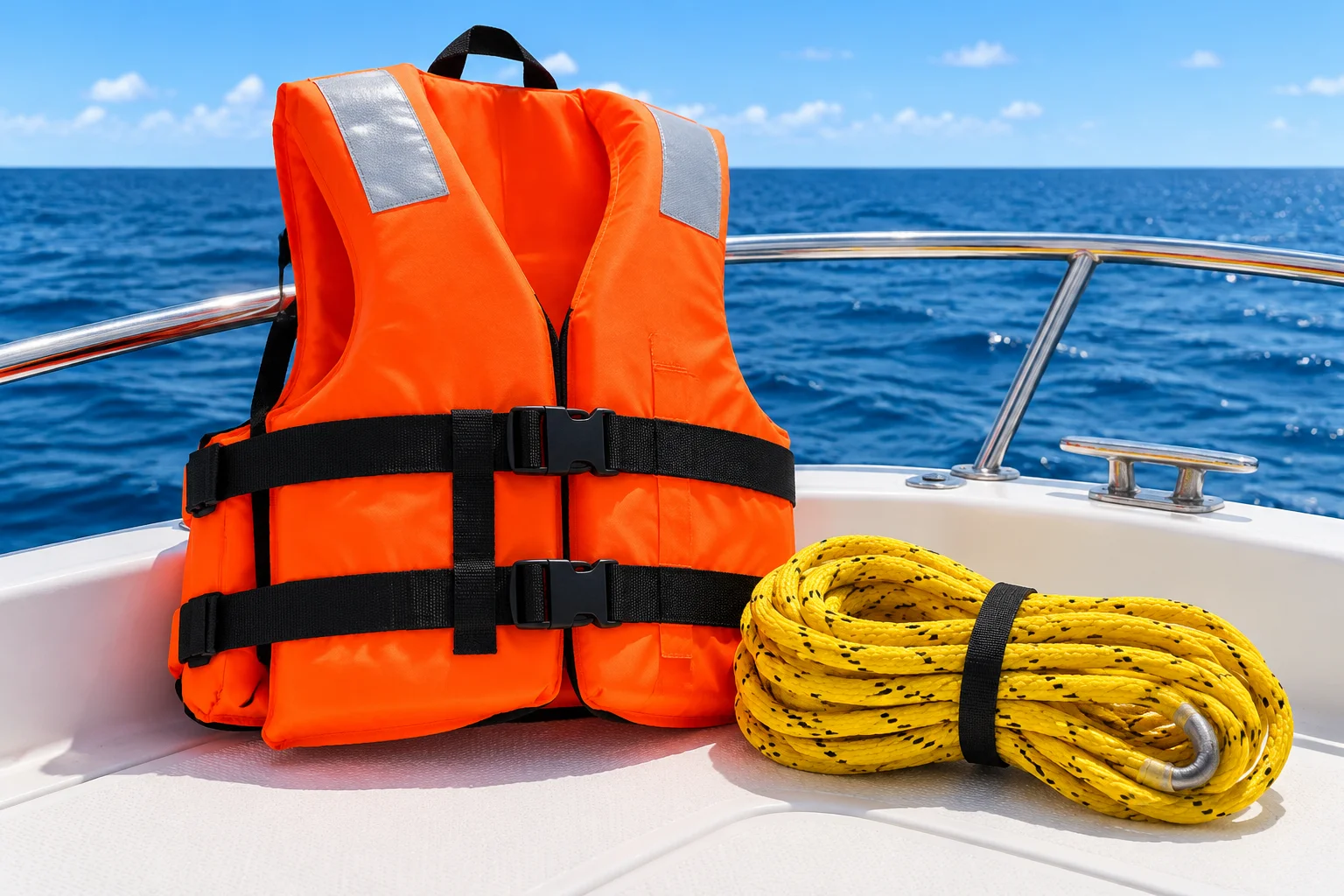
Modern inflatable life vests and ergonomic foam safety vests like the Bravento MarineVest provide full torso freedom for rowing, paddling, or motor operation. Check that every vest on board is appropriately rated for the wearer's weight, fitted with intact crotch straps when applicable, and equipped with a pealess whistle securely tethered to the chest tab.
2. Signaling Tools, Throw Lines, and Secondary Safeguards
When an emergency happens beyond immediate swimming distance from shore, visible and audible signaling equipment shortens rescue times drastically. In thick coastal mist or heavy chop, boaters seated low in an inflatable hull or on a SUP board become almost invisible to larger powerboats.
- Floating Throw Bag with minimum 15 to 20 meters of high-visibility polypropylene buoyant rope.
- High-decibel pealess whistle capable of sounding through wind and heavy spray without moving parts jamming.
- Watertight LED distress beacon or strobe light attached to the shoulder webbing of each crew member.
- Manual bailing scoop or high-capacity bilge sponge for swift dewatering of inflatable hulls.
Pair these mechanical instruments with a waterproof dry pack housing dry spare clothing, a thermal emergency bivvy sack, a compact field first aid kit, and an emergency communicator or phone stored inside a certified airtight pouch. Practice throwing the rescue rope from a seated position on your boat prior to facing actual open-water swells.
Related Adventures & Guides
Ready to test these techniques on open water?
Explore our range of heavy-duty inflatable boats, SUP boards, carbon paddles, and electric marine motors.
Emma B. Verified Paddler
Safety first! Always wear a life jacket. I have seen sudden squalls turn a placid bay into 3-foot chop in less than ten minutes. Having a reliable vest on makes all the difference in keeping your head clear.
Paul M. Verified Angler
Important reminders for everyone. The throw rope point is often neglected by casual boaters. Keep the bag clipped to an easily reachable D-ring where anyone in the boat can grab and deploy it without untangling lines.