
Packing Your Waterproof Bag: What to Bring
Whether heading out for a rapid inflatable boat expedition or a coastal SUP paddle, organizing your dry bag properly keeps emergency equipment dry, electronics protected, and essential gear readily reachable.
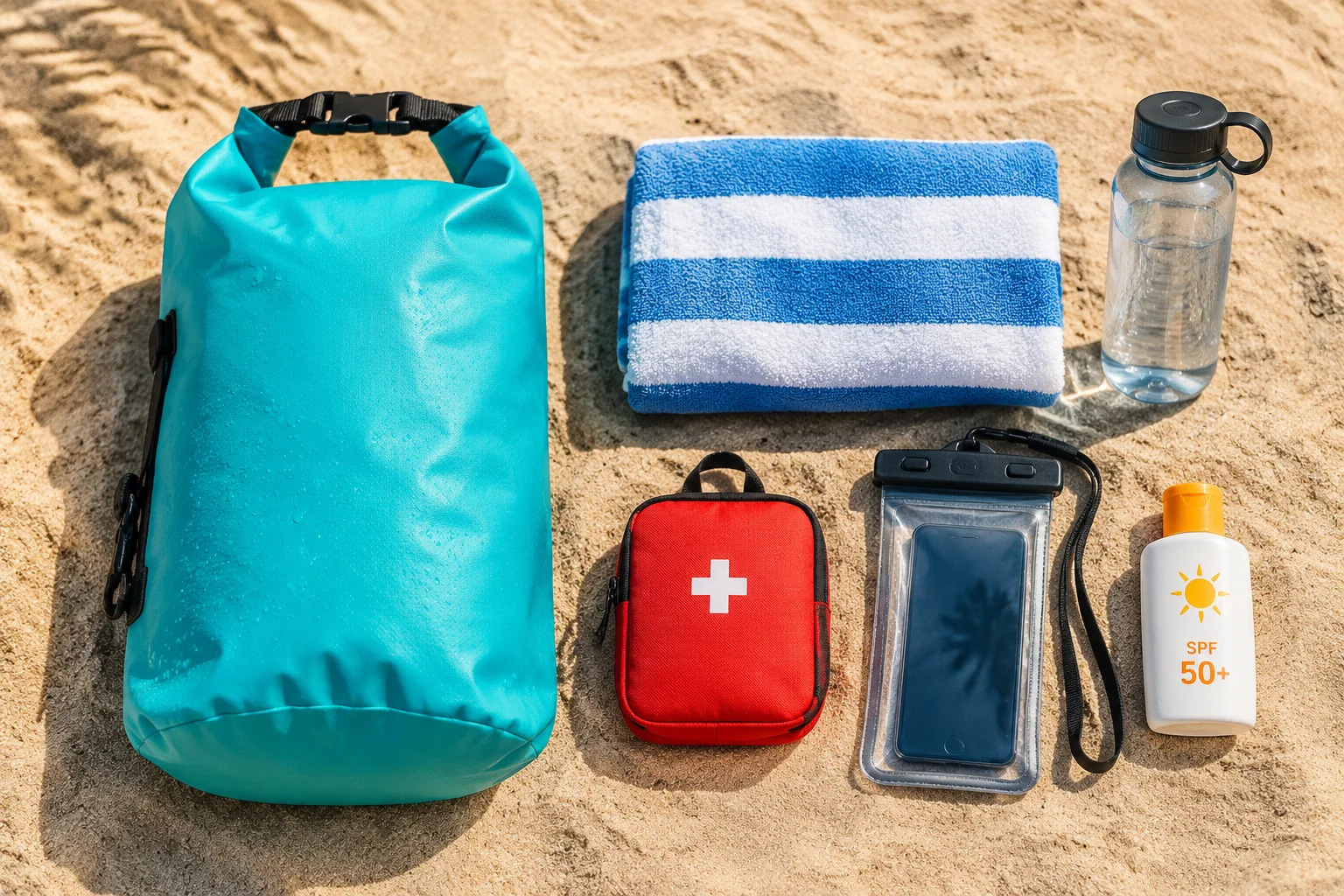 Field Checklist
Strategic Layering and Essential Water Protection
A waterproof dry bag only performs as well as your packing technique. Placing high-density spare clothing at the bottom creates a stable foundation, while sensitive communication devices, optical items, and medical aids need secondary sealing and top-layer accessibility.
Article Chapters & Advice
Arranging Internal Layers for Stability and Rapid Retrieval
Packing a dry sack requires deliberate tiering rather than stuffing gear at random. Start by laying down soft, resilient items like a quick-dry microfiber towel, spare thermal base layers, or wool socks directly against the bottom panel. This foundation cushions vulnerable contents when the bag rests on gravelly riverbanks and reinforces circular structural integrity.
Mid-tier placement belongs to dense, mid-priority provisions. Food rations in hermetic zip pouches, backup battery packs, thermal drink flasks, and camp lighting settle neatly into this section. Distributing weight evenly preserves boat trim and prevents sup board bag imbalance during choppy crossings.
Essential Gear Categories for Day Expeditions
Every water excursion demands a balance between redundant safety gear and weight limits. Regardless of your watercraft type, never set launch without these core items packed and checked:
- Personal identification, boating permits, cash, and vehicle keys in a dedicated floatable pouch.
- Compact trauma kit containing sterile gauze, blister patches, antiseptic swabs, and water purification tablets.
- High-SPF reef-safe sunscreen, polarized sunglasses with retention cord, and bug repellent balm.
- Full-charge portable power bank with sealed charging cable and an emergency pealess whistle.
Inspect the bag mouth before closure. Smooth out the reinforcing bands, squeeze excess trapped air to prevent high-volume ballooning, and roll down the top hem at least three full turns before locking the buckle clips firmly together.
Related Adventures & Guides
Ready to test these techniques on open water?
Explore our range of heavy-duty inflatable boats, SUP boards, carbon paddles, and electric marine motors.
Leave a Comment or Question