
How to Properly Maintain Your PVC Boat
Practical care steps, routine chamber inspections, and proven field tips to protect fabric elasticity, keep seams airtight, and extend your inflatable vessel's lifespan across all water conditions.
 Field Guide
Preserving Tube Flexibility and Welded Seam Integrity
Polyvinyl chloride marine craft offer exceptional portability and resilience, but uncleaned river grit, ultraviolet breakdown, and thermal pressure spikes can weaken fabric layers over time. Routine fresh-water flushing, non-petroleum cleansing, and uncompressed off-season storage maintain airtight performance season after season.
Article Chapters & Advice
Post-Voyage Washing and Debris Extraction
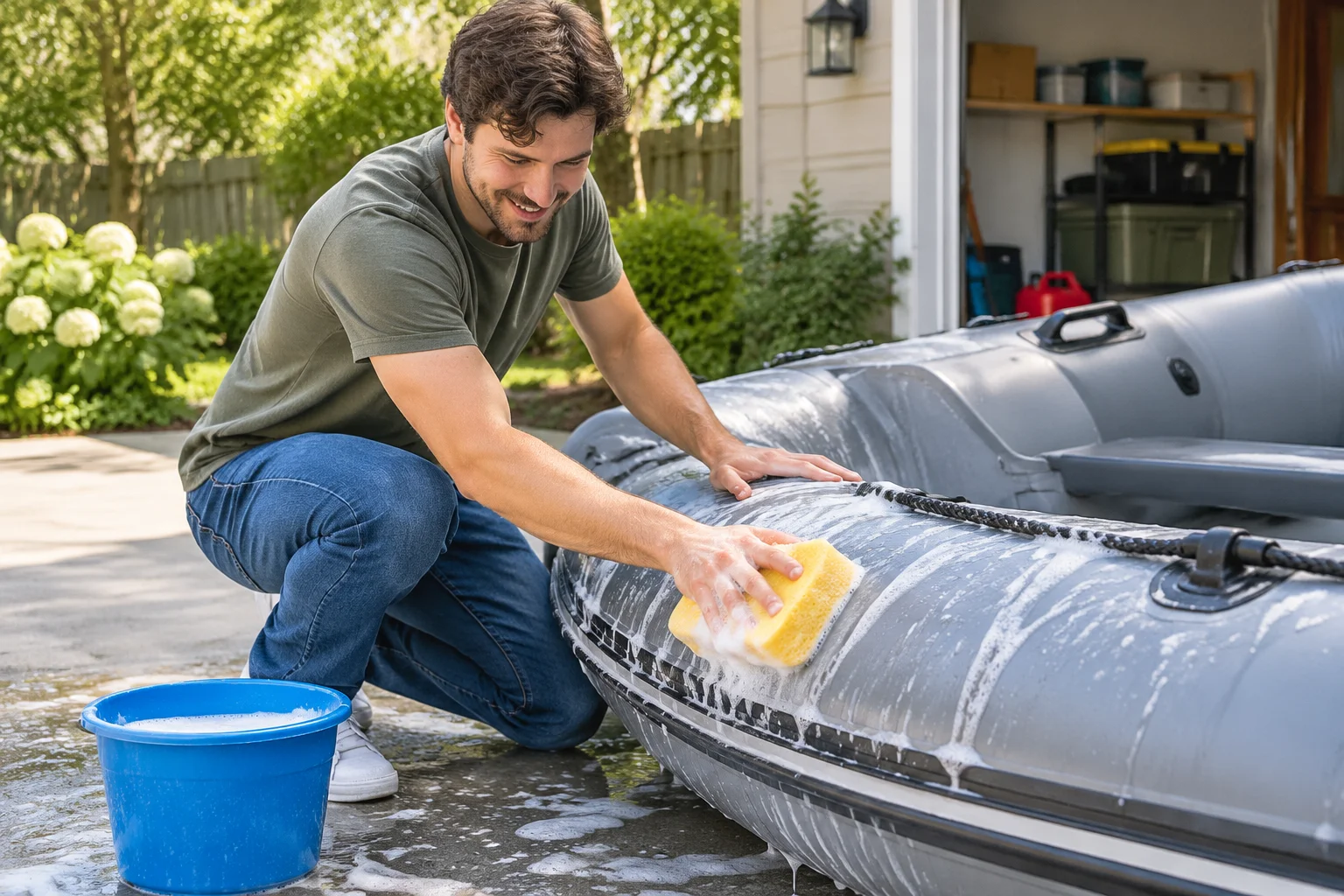
Every journey deposits microscopic quartz particles, organic weeds, and dried salt crystals along interior cockpit joints and under floorboards. Left unattended, these sharp mineral sediments grind against inner seam welds during transport and choppy runs. Rinse the fully inflated craft with low-pressure fresh water, dislodge stubborn residue from floor seams with a soft bristle brush, and clean the skin using mild biodegradable dish soap.
Never clean PVC surfaces with solvent-heavy chemicals like acetone, gasoline, or paint thinners. Corrosive petrochemical liquids leach structural plasticizers out of laminated fabric sheets, leaving the PVC brittle, faded, and prone to pinhole leaks. Dedicated marine PVC wash formulas quickly break down fish oil and waterline stains without stripping protective polymer coats.
Thermal Pressure Fluctuations & Valve Inspection
Ambient heat rapidly alters the pressure inside sealed inflatable chambers. A morning inflation to 0.25 bar can soar above 0.35 bar under direct midday sunlight, placing destructive tension on glued transom junctions and baffle welds. Verify chamber firmness with a handheld manometer and bleed small amounts of air during peak afternoon warmth.
- Examine push-turn valve gaskets and inner springs for sand contamination before pumping.
- Treat clean exterior tube surfaces with an aerospace-grade polymer UV blocker twice a season.
- Relieve air volume immediately when dragging boats onto sun-baked gravel beaches or hot docks.
- Dry fabric folds entirely before winter stowing to eliminate mold and mildew spore formation.
Before packing your vessel into its transport bag, inspect valve seals with a sponge dabbed in soapy water to verify airtight closure. Loose valve barrels should be tightened gently using a ribbed valve wrench, and moving spring mechanisms should receive a microscopic drop of pure silicone lubricant to prevent sticking.
Related Adventures & Guides
Ready to test these techniques on open water?
Explore our range of heavy-duty inflatable boats, SUP boards, carbon paddles, and electric marine motors.
Leave a Comment or Question